Eczema vs Psoriasis: Understanding the Main Differences
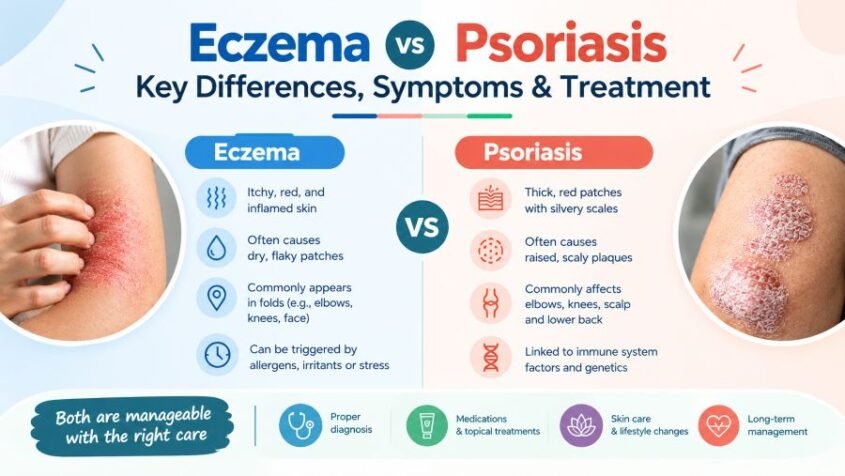
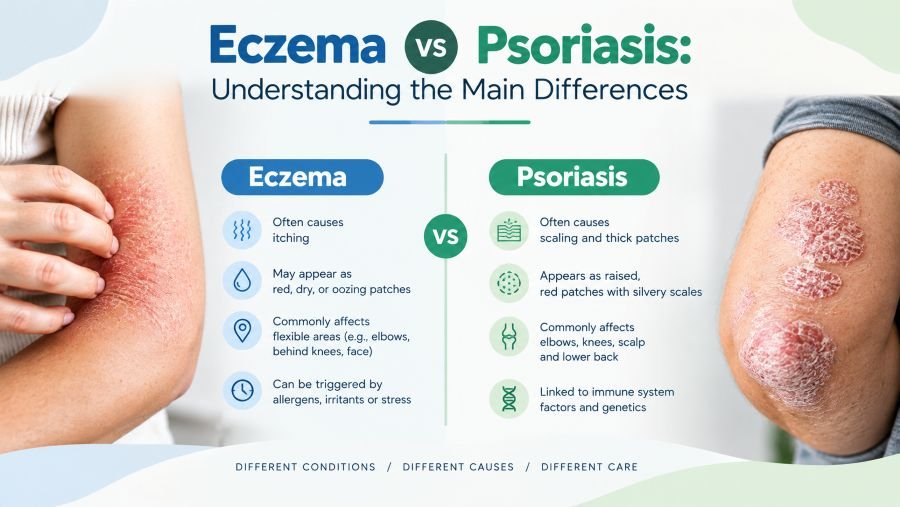
Eczema vs psoriasis is something many people search for when they notice itchy, irritated or scaly skin patches. Both are term inflammatory skin problems and can sometimes look alike.. They are different conditions that need different ways of diagnosis and treatment. Eczema, atopic dermatitis often leads to very itchy, dry and red skin. Psoriasis on the hand usually causes thick raised areas with scales that stand out clearly.
One simple way to tell eczema from psoriasis is by checking how itchy the skin is, what the rash looks like and where it shows up. Eczema tends to cause itching. Scratching can make the skin raw cracked or even bleed. During flare-ups the skin might. Form crusts. Psoriasis commonly creates thicker bumpy patches with flaky layers. The look can vary depending on the type of psoriasis and the person’s skin tone.
The location of the rash can also help identify which condition it is. Eczema often appears in the creases of elbows and knees on the hands and in sensitive spots. It can show up anywhere though. Psoriasis frequently affects elbows, knees, scalp and other parts of the body. It may also affect nails making them thicken or develop pits.. These patterns aren’t set in stone. That’s why guessing your skin problem just by where the rash is can be misleading.
Another key difference lies in how each condition works inside the body. Atopic dermatitis involves a skin barrier and overactive immune responses. Genes and environmental factors both play a role in causing it. In psoriasis the immune system speeds up the production of skin cells. This causes them to pile up quickly forming plaques or patches. Family history increases the chance of developing psoriasis.
Neither eczema nor psoriasis is contagious. You cannot catch either condition by touching someone who has it. While both can have recurring flare-ups, their triggers, appearance and treatment plans differ significantly.
Eczema Symptoms vs Psoriasis Symptoms, Causes and Triggers
Recognizing eczema symptoms can help you decide when to see a doctor. Atopic eczema typically makes the skin dry itchy and inflamed. Depending on your skin tone the inflamed areas might appear red, brown, purple, gray or lighter or darker than the rest of your skin. When you scratch the skin may become thickened, cracked, raw, bleeding, oozing or crusted.
Itching from eczema can be very hard to deal with. Many people go through times when symptoms get worse and then times when the skin calms down. Common things that make eczema worse include soaps or detergents, fragrances, clothing fabrics, temperature changes, heat, stress and other personal triggers. Not everyone reacts the way so finding your own triggers can be useful.
Psoriasis symptoms are different. Plaque psoriasis is the common form. It usually shows as thick raised patches called plaques with scales. It often appears on elbows, knees, scalp and other areas. Some types can affect nails or joints. The way psoriasis looks can be different across skin tones. Its not good to judge based only on descriptions meant for lighter skin.
The causes of eczema and psoriasis are also different. Atopic dermatitis is linked to genetics, immune activity and a weak skin barrier. When the skin barrier doesn’t work well moisture leaves easily and irritants can enter the skin leading to inflammation.
In psoriasis genes and immune system activity are factors. Certain triggers can bring on psoriasis. Make it worse in those who are prone to it. These triggers include stress, skin injuries, infections, cold or dry weather, smoking and some medicines. Triggers vary greatly between people.
Because symptoms can overlap it’s easy to mix up eczema and psoriasis. Some people even have both conditions. A dermatologist can diagnose by looking at the skin and asking about symptoms, medical history, family history and possible triggers. In some cases a closer test or skin biopsy might be needed.
Eczema Treatment vs Psoriasis Treatment: Why Dermatologist Diagnosis Matters
The right treatment for eczema depends on the type how severe it is, where it shows up and what triggers it. Managing atopic dermatitis usually includes moisturizing, gentle skincare avoiding known triggers and using prescribed medicines if needed. Doctors may suggest corticosteroids or other creams depending on the patient’s situation. Keeping the skin moisturized is key because it helps repair the skin barrier and lowers dryness and irritation.
Psoriasis treatment is also customized. Based on the type, severity and location treatment might involve creams, moisturizers, light therapy or medicines taken by mouth or injection. A dermatologist takes into account how much of the body is affected, which areas are involved, nail or joint issues health problems and past treatments when planning care.
It’s important not to assume that one cream will work for both conditions. Eczema vs psoriasis needs diagnosis because rashes that look similar can have very different causes and react differently to treatment. Using prescription medicines, especially corticosteroids without a doctor’s advice can be dangerous especially on certain parts of the body.
If you have itching, repeated rashes, thick or scaly patches, cracks, bleeding or changes in skin color seeing a dermatologist in Delhi can help find the cause. A professional check-up can point out whether it’s eczema or psoriasis and rule out skin issues that look alike.
For those seeking an eczema specialist in Delhi or psoriasis treatment in Delhi ProDerm Solutions offers evaluation and personalized care for various skin problems. A dermatologist can examine the rash’s look and spread understand your symptoms and background and suggest the treatment method.
Conclusion
Knowing the difference between eczema and psoriasis helps you see why two skin rashes that look alike might need different treatments. Eczema is usually marked by itching, dryness and redness. Psoriasis often brings thick defined plaques with scaling. Still symptoms can. Some people have both conditions.
Telling eczema apart from psoriasis isn’t always possible by looking. If your skin problems keep coming don’t improve or get worse seeing a dermatologist is the best step. Getting a diagnosis and a tailored treatment plan can ease symptoms and help you live better with healthier skin.
FAQs
1. What is the main difference between eczema and psoriasis?
The main differences are in how the looks how itchy it feels where it appears and what’s happening inside the body. Eczema usually causes itchy dry inflamed skin. Psoriasis often shows up as thick raised clearly outlined patches with scales.. Since the signs can mix a professional diagnosis is often needed.
2. Is eczema or psoriasis more itchy?
Eczema is generally more itchy. Psoriasis can itch too. It often comes with thick, scaly patches. How bad the itching feels depends on the person and how severe the condition is.
3. Can a person have both eczema and psoriasis?
Yes. Even though they are different some people do have both eczema and psoriasis. That can make diagnosis harder. A dermatologist can carefully examine the skin and symptoms to figure out what’s going on.
4. Are eczema and psoriasis contagious?
No. Neither eczema nor psoriasis spreads through touch. They are not conditions.
5. When should I see a dermatologist, for eczema or psoriasis?
See a dermatologist if a rash lasts a time keeps returning becomes painful or very itchy develops cracks or bleeds messes with your everyday life or doesn’t get better with basic care. A dermatologist can properly identify the issue. Build a treatment plan just for you.
Thanks for reading
……………………………………………………
Click here to read more: Visit now
Visit our website to see all services: Click here to visit
Directly contact us on WhatsApp at +91 8448813136
Call now : +91 7678516068
acne and pigmentation treatmentdermatologist skin care tipsmonsoon skincare tipsskin care tips for Indian weatherskin protection in summerskincare routine for Indian climatewinter skincare routine India
Best dermatologist in DelhiBest dermatologist South DelhiEczema children and adultsHair growth therapy in DelhiLaser for acne & scar under senior consultantPsoriasis treatment in DelhiSkin allergy treatmentSkin specialist in DelhiTop acne treatment in DelhiTop Vitiligo cures in Delhi
acne scar laser treatmentadvanced skin laser treatmentbest dermatologist for laser treatment in delhidermatologist south delhilaser clinic in delhilaser dermatologist delhilaser skin treatment delhipigmentation laser treatment delhiSkin specialist in Delhi
Acne Scar TreatmentAcne Treatment DelhiBest dermatologist in DelhiBridal Skin CareChemical Peel TreatmentGroom Skin CareHydrafacial DelhiLaser Skin TreatmentPre Bridal FacialPre-Wedding Skin TreatmentsSkin allergy treatmentSkin Glow TreatmentSkin Specialist DelhiWedding Skin Care Tips