When Should You Visit a Dermatologist? Signs You Shouldn’t Ignore
Your skin is the largest organ of your body and serves as the first line of defence against environmental damage, bacteria, and harmful UV rays. While many minor skin issues can be managed with proper skincare, some conditions require professional medical attention. Unfortunately, many people delay visiting a dermatologist, hoping the problem will resolve on its own. This delay can often worsen the condition and make treatment more difficult.
A dermatologist specialises in diagnosing and treating diseases related to the skin, hair, and nails. Whether you’re dealing with persistent acne, unexplained rashes, hair loss, or suspicious moles, seeking expert care at the right time can prevent complications and improve your overall skin health.
In this guide, we’ll discuss the common signs that indicate it’s time to schedule an appointment with a dermatologist.
What Does a Dermatologist Do?
A dermatologist is a medical specialist trained to diagnose and treat over 3,000 skin, hair, and nail conditions. Their expertise includes:
Acne treatment
Eczema and psoriasis management
Skin allergy diagnosis
Hair loss treatment
Fungal and bacterial infections
Nail disorders
Skin cancer screening
Cosmetic skin treatments
Anti-aging procedures
Pigmentation correction
Regular dermatology visits can help maintain healthy skin while detecting serious conditions early.
Signs You Should Visit a Dermatologist
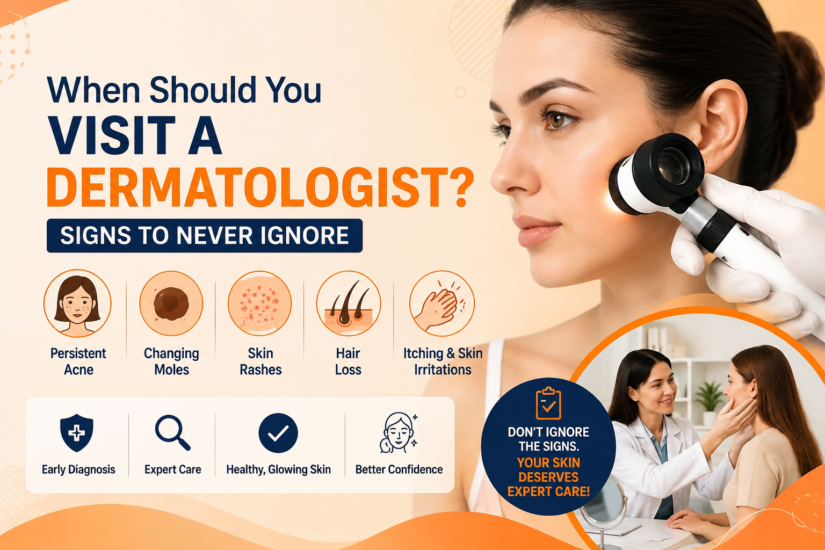
1. Persistent Acne That Doesn’t Improve
Acne is one of the most common skin conditions, but if over-the-counter products aren’t helping after several weeks, it’s time to seek professional care.
You should visit a dermatologist if you have:
Painful cystic acne
Deep pimples
Acne scars
Frequent breakouts
Acne affecting your confidence
Prescription medications, chemical peels, laser therapy, or hormone-based treatments may provide better results.
2. A Mole That Changes Shape or Colour
Changes in existing moles can sometimes indicate skin cancer, including melanoma.
Watch for:
Uneven borders
Multiple colors
Rapid growth
Bleeding
Itching
Diameter larger than 6 mm
Early diagnosis significantly improves treatment success.
3. Persistent Skin Rashes
A rash lasting more than two weeks deserves medical evaluation.
Possible causes include:
Allergic reactions
Eczema
Psoriasis
Fungal infections
Autoimmune diseases
Contact dermatitis
Self-treatment may worsen certain skin conditions, making professional diagnosis essential.
4. Excessive Hair Loss
Losing around 50–100 hairs daily is normal. However, noticeable thinning or bald patches may indicate an underlying issue.
Common causes include:
Hormonal imbalance
Thyroid disorders
Nutritional deficiencies
Stress
Alopecia areata
Genetic hair loss
Early treatment often produces better results.
5. Severe Itching Without a Clear Cause
Persistent itching can indicate more than dry skin.
Possible conditions include:
Eczema
Psoriasis
Liver disease
Kidney disorders
Allergies
Skin infections
If itching interferes with sleep or daily activities, consult a dermatologist.
6. Skin Infections
Skin infections should never be ignored.
Symptoms include:
Redness
Swelling
Warm skin
Pus formation
Pain
Fever
These infections may be caused by bacteria, fungi, or viruses and often require prescription medication.
7. Changes in Skin Pigmentation
Dark patches, white spots, or uneven pigmentation may indicate:
Melasma
Vitiligo
Sun damage
Hormonal changes
Post-inflammatory hyperpigmentation
A dermatologist can identify the cause and recommend appropriate treatment.
8. Chronic Dry Skin
Dry skin that persists despite regular moisturising may be linked to conditions such as:
Eczema
Psoriasis
Diabetes
Thyroid disease
Professional evaluation can help uncover the underlying cause.
9. Nail Problems
Your nails can reveal important clues about your overall health.
Consult a dermatologist if you notice:
Thickened nails
Yellow nails
Nail separation
Dark streaks
Frequent infections
Painful ingrown nails
Many nail disorders require specialised treatment.
10. Signs of Premature Skin Ageing
If you’re concerned about:
Fine lines
Wrinkles
Sun damage
Age spots
Loss of skin elasticity
A dermatologist can recommend treatments such as retinoids, chemical peels, laser resurfacing, or other evidence-based cosmetic procedures.
How Often Should You Visit a Dermatologist?
The ideal frequency depends on your skin type and medical history.
General recommendations include:
Healthy adults: Once every year for a skin examination.
People with chronic skin conditions: Every 3–6 months or as advised.
Individuals with a family history of skin cancer: Regular screenings as recommended by your dermatologist.
People undergoing treatment: Follow-up visits according to the treatment plan.
Preventive care can identify potential issues before they become serious.
Benefits of Early Dermatological Care
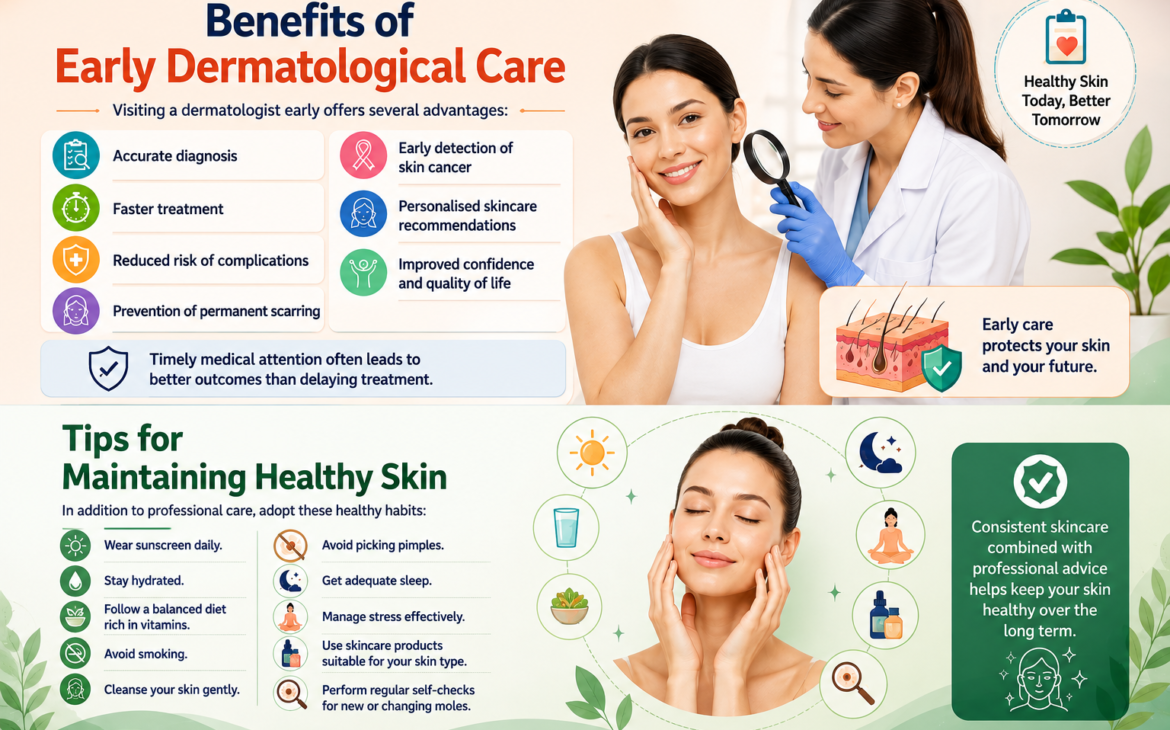
Visiting a dermatologist early offers several advantages:
Accurate diagnosis
Faster treatment
Reduced risk of complications
Prevention of permanent scarring
Early detection of skin cancer
Personalised skincare recommendations
Improved confidence and quality of life
Timely medical attention often leads to better outcomes than delaying treatment.
Tips for Maintaining Healthy Skin
In addition to professional care, adopt these healthy habits:
Wear sunscreen daily.
Stay hydrated.
Follow a balanced diet rich in vitamins.
Avoid smoking.
Cleanse your skin gently.
Avoid picking pimples.
Get adequate sleep.
Manage stress effectively.
Use skincare products suitable for your skin type.
Perform regular self-checks for new or changing moles.
Consistent skincare combined with professional advice helps keep your skin healthy over the long term.
Conclusion
Your skin often provides early warning signs of underlying health issues. While occasional pimples or temporary dryness are common, persistent acne, unexplained rashes, unusual moles, excessive hair loss, chronic itching, or recurring skin infections should never be ignored.
Early consultation with a dermatologist can lead to quicker diagnosis, more effective treatment, and prevention of long-term complications. Regular skin checkups are not just for treating problems—they are an important part of preventive healthcare. If you notice any unusual or persistent changes in your skin, hair, or nails, don’t delay seeking professional medical advice. Healthy skin begins with timely care and informed decisions.
Frequently Asked Questions (FAQs)
1. When should I see a dermatologist for acne?
If your acne doesn’t improve after 6–8 weeks of over-the-counter treatment, causes pain, leaves scars, or frequently returns, it’s time to consult a dermatologist.
2. How often should I have a skin check?
Most adults should have a professional skin examination once a year. People at higher risk for skin cancer may need more frequent screenings.
3. Can a dermatologist treat hair loss?
Yes. Dermatologists diagnose the cause of hair loss and provide treatments such as medications, injections, lifestyle recommendations, or specialised procedures depending on the condition.
4. Should I worry about changing moles?
Yes. Any mole that changes in size, shape, colour, or begins to bleed or itch should be evaluated promptly to rule out skin cancer.
5. Can a dermatologist help with cosmetic skin concerns?
Yes. Dermatologists offer treatments for wrinkles, pigmentation, acne scars, sun damage, and other cosmetic skin concerns using safe, evidence-based procedures.
Thanks for reading
……………………………………………………
Click here to read more: Visit now
Visit our website to see all services: Click here to visit
Directly contact us on WhatsApp at +91 8448813136
Call now : +91 7678516068
acne and pigmentation treatmentdermatologist skin care tipsmonsoon skincare tipsskin care tips for Indian weatherskin protection in summerskincare routine for Indian climatewinter skincare routine India
Best dermatologist in DelhiBest dermatologist South DelhiEczema children and adultsHair growth therapy in DelhiLaser for acne & scar under senior consultantPsoriasis treatment in DelhiSkin allergy treatmentSkin specialist in DelhiTop acne treatment in DelhiTop Vitiligo cures in Delhi
acne scar laser treatmentadvanced skin laser treatmentbest dermatologist for laser treatment in delhidermatologist south delhilaser clinic in delhilaser dermatologist delhilaser skin treatment delhipigmentation laser treatment delhiSkin specialist in Delhi
Acne Scar TreatmentAcne Treatment DelhiBest dermatologist in DelhiBridal Skin CareChemical Peel TreatmentGroom Skin CareHydrafacial DelhiLaser Skin TreatmentPre Bridal FacialPre-Wedding Skin TreatmentsSkin allergy treatmentSkin Glow TreatmentSkin Specialist DelhiWedding Skin Care Tips