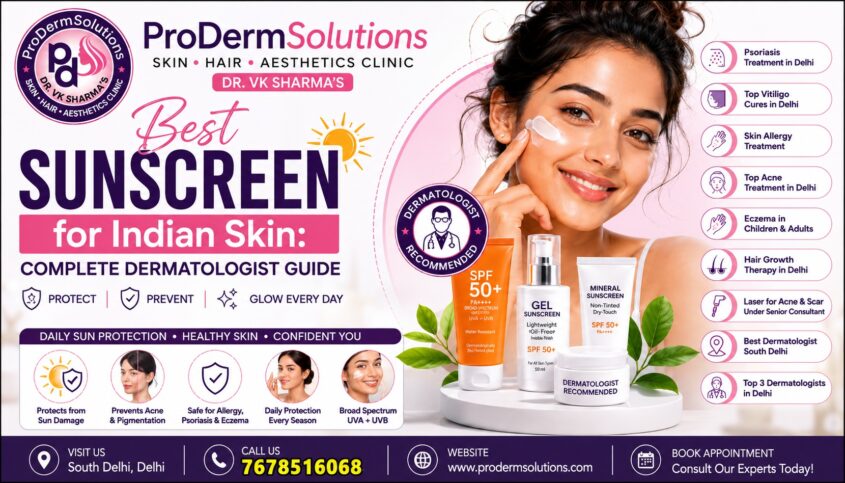
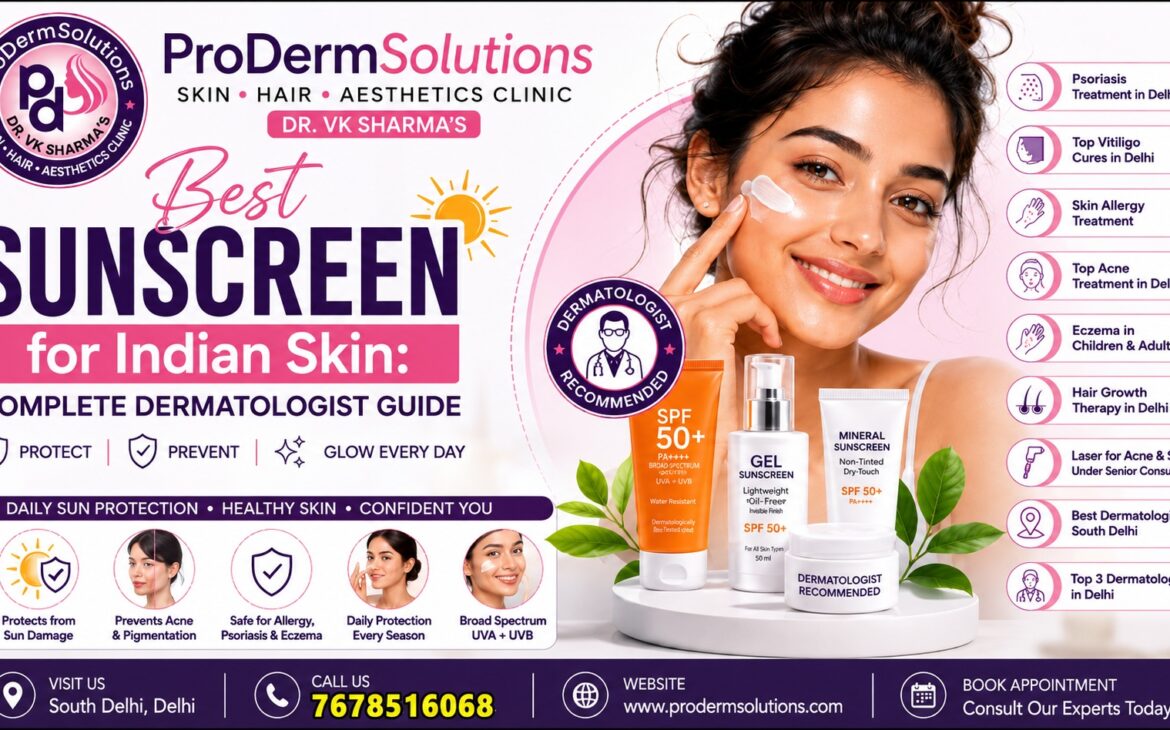
Best Sunscreen for Indian Skin: Complete Dermatologist Guide
Daily environmental challenges such Best Sunscreen as UV exposure (from sun), humidity, pollution, and inflammation through pimples (or) aging add up to a lot of negative factors for the typical person with Indian skin to look after their skin each day. Therefore, sunscreen is no longer just an option but becomes a valuable tool for protecting ourselves against the sun’s damaging effects (and) resulting skin problems like acne, eczema, psoriasis, vitiligo, allergic reactions, and hyperpigmentation (and) is strongly recommended by dermatologists to be worn every single day.
A common belief about sunscreen is that it is only used during the summer months; however, the sun’s harmful rays are found every day of the year, meaning that protecting your skin from the sun every day becomes extremely important if you are aiming for good healthy skin.
In this 7-part guide to selecting a sunscreen that will work best for your skin type, you will also learn:
1) How to choose a good sunscreen according to your skin type;
2) Why dermatologists recommend daily use of SPF; and
3) How wearing sunscreen supports various types of treatment, such as psoriasis treatment in Delhi, acne treatment in Delhi, skin allergy treatment and vitiligo treatment.
Why Sunscreen Is Important for Indian Skin
Indian skin contains higher melanin levels compared to lighter skin tones. Although melanin offers some natural protection, it cannot completely block harmful UV radiation. Consequently, prolonged sun exposure can still lead to:
- Pigmentation
- Sunburn
- Melasma
- Tanning
- Acne marks
- Premature aging
- Uneven skin tone
- Skin allergies
- Psoriasis flare-ups
- Vitiligo sensitivity
Furthermore, dermatologists explain that UV exposure can reduce the effectiveness of several advanced dermatology procedures including laser for acne scar under senior consultant, chemical peels, and pigmentation treatments.
Therefore, sunscreen acts as the first line of defense against skin damage.
How to Choose the Best Sunscreen for Indian Skin
Selecting the right sunscreen depends on your skin type and existing skin concerns. Additionally, modern sunscreens are available in gel, cream, lotion, matte, and mineral formulas.
1. Choose SPF 30 or Higher
Dermatologists usually recommend SPF 30 or SPF 50 for Indian weather conditions. Higher SPF provides better protection against harmful UVB rays.
2. Look for Broad-Spectrum Protection
Broad-spectrum sunscreens protect against both UVA and UVB rays. This is especially important for patients undergoing top acne treatment in Delhi or pigmentation therapies.
3. Select According to Skin Type
For Oily & Acne-Prone Skin
- Gel-based sunscreen
- Non-comedogenic formula
- Matte finish sunscreen
For Dry Skin
- Hydrating sunscreen with ceramides
- Cream-based SPF products
For Sensitive Skin
- Mineral sunscreen with zinc oxide
- Fragrance-free products
For Children
Children suffering from eczema in children and adults require gentle, dermatologist-approved sunscreens without harsh chemicals.
Best Sunscreen Ingredients Recommended by Dermatologists
Several ingredients improve sunscreen effectiveness while protecting sensitive Indian skin.
Zinc Oxide
Provides physical UV protection and works well for sensitive skin.
Niacin amide
Helps reduce pigmentation, acne marks, and inflammation.
Hyaluronic Acid
Maintains hydration and prevents dryness.
Ceramides
Support the skin barrier in eczema and allergy patients.
Vitamin C
Brightens the skin and reduces sun damage.
Sunscreen for Acne-Prone Skin
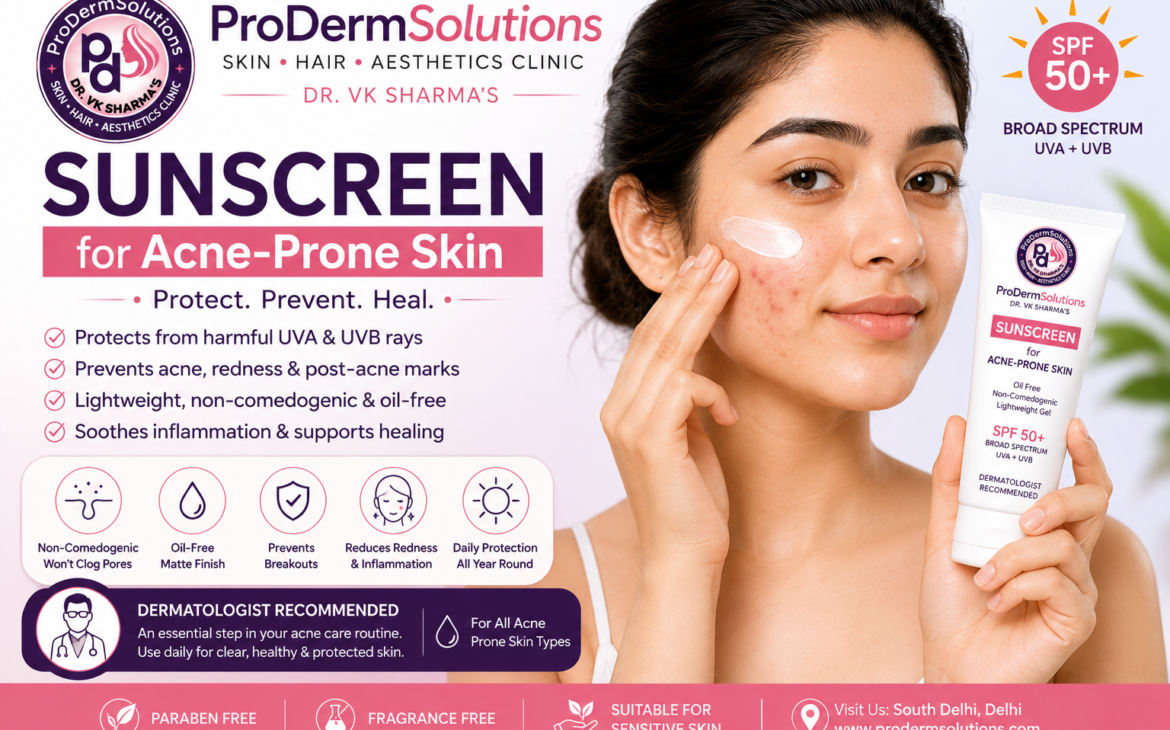
Many acne patients avoid sunscreen because they fear breakouts. However, dermatologists confirm that skipping sunscreen can worsen acne marks and pigmentation.
Additionally, patients receiving top acne treatment in Delhi or undergoing laser for acne scar under senior consultant must use sunscreen regularly to protect healing skin.
Tips for Acne Patients
- Use oil-free sunscreen
- Avoid heavy cream formulas
- Reapply every 3–4 hours
- Choose dermatologist-tested SPF products
As a result, sunscreen helps prevent post-acne pigmentation and supports faster recovery.
Sunscreen for Psoriasis & Vitiligo Patients
Patients seeking psoriasis treatment in Delhi often experience flare-ups triggered by excessive sun exposure. Similarly, vitiligo patches become highly sensitive to UV rays.
Therefore, dermatologists recommend sunscreen for:
- Preventing irritation
- Reducing inflammation
- Protecting depigmented skin
- Supporting phototherapy sessions
Moreover, individuals searching for top vitiligo cures in Delhi should understand that sunscreen is an essential part of vitiligo management.
Sunscreen for Skin Allergy & Eczema
People undergoing skin allergy treatment frequently have compromised skin barriers. Consequently, harsh cosmetic products can trigger itching, redness, and irritation.
Similarly, patients suffering from eczema in children and adults require extra sun protection because eczema-prone skin becomes more sensitive outdoors.
Dermatologist Recommendations
- Use mineral sunscreen
- Avoid alcohol-based SPF
- Prefer fragrance-free formulas
- Apply moisturizer before sunscreen
In addition, regular sunscreen use prevents inflammation caused by heat and sunlight.
Importance of Sunscreen after Dermatology Procedures
Advanced dermatological treatments may temporarily increase the sensitivity of the skin. Therefore, the importance of sun protection is increased following the following procedures:
• Chemical Peels
• Laser Resurfacing
• Acne Scar Treatments
• PRP
• Micro needling
• Pigmentation Treatment
After any one of these treatments, patients who visit the top dermatology clinics in South Delhi will be advised to stay out of direct sunlight.
In addition, those who are undergoing hair growth therapy in Delhi may also be required to
Common Sunscreen Mistakes Indians Make
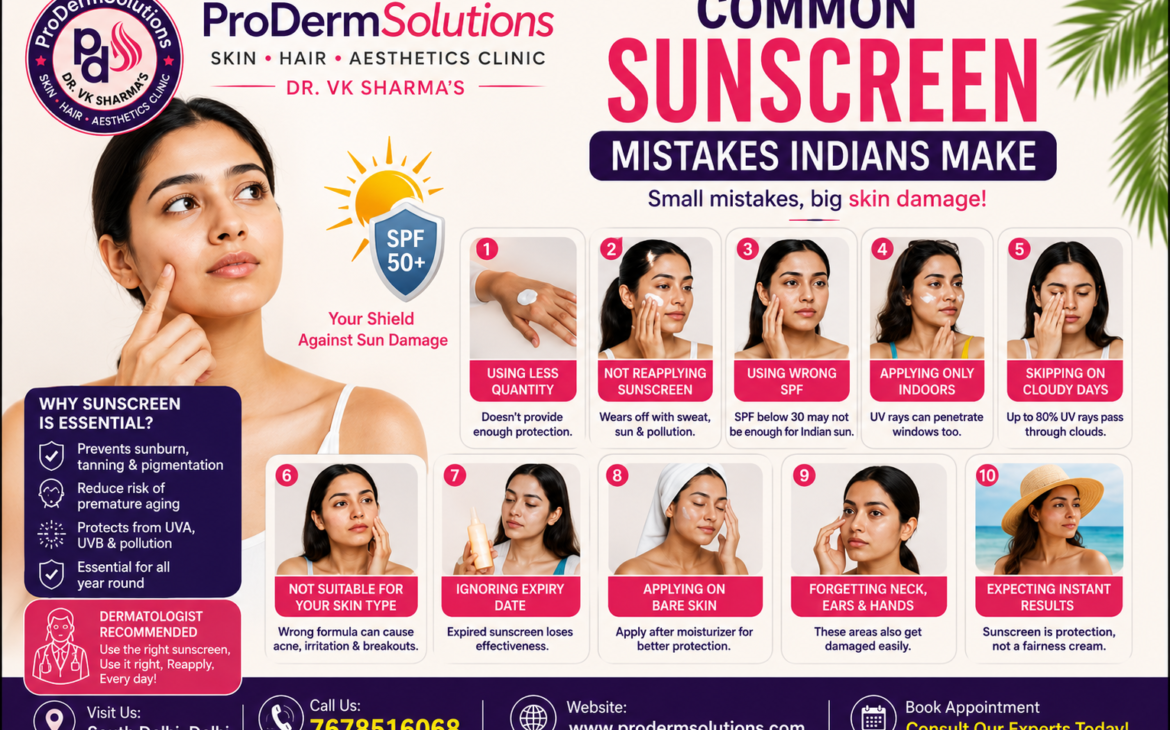
Even with awareness of how to apply sunscreen properly, many people continue to misuse sunscreen.
Applying the Wrong Amount
Typically, a large number of individuals do not use the amount that has been recommended for proper application.
Reapplying Sunscreen Too Rarely
The recommended period is two to four hours, but this can vary depending on how much sunscreen has been used, and how much skin was exposed.
Using Sunscreen Only in Summer Months
In all seasons, skin can be damaged by UV exposure.
Not Considering Indoor Exposure to the Sun
Blue light and indirect light will also cause hyperpigmentation (the formation of darker pigment due to excessive UV exposure).
Applying the Wrong Type of Sunscreens
Some sunscreens are heavy and can block pores and cause increased acne.
It is therefore important to determine the most appropriate type of sunscreen by consulting a dermatologist.
How Dermatologists Help in Choosing the Right Sunscreen
Experienced dermatologists analyze:
- Skin type
- Acne severity
- Pigmentation level
- Allergy history
- Sensitivity
- Ongoing treatments
Consequently, personalized sunscreen recommendations improve treatment outcomes significantly.
Patients searching for the top 3 dermatologists in Delhi or the best dermatologist South Delhi should always choose specialists who provide complete skincare guidance along with treatment plans.
Conclusion
Choosing the best sunscreen for Indian skin is one of the most important steps toward healthy and protected skin. Whether you are dealing with acne, pigmentation, allergies, psoriasis, eczema, vitiligo, or undergoing advanced dermatology procedures, sunscreen plays a major role in protecting and healing the skin.
Moreover, consistent SPF use helps prevent premature aging, uneven skin tone, and treatment complications. Therefore, consulting an experienced dermatologist can help you select the ideal sunscreen according to your skin condition and lifestyle.
If you are planning advanced skincare procedures such as top acne treatment in Delhi,
hair growth therapy in Delhi, skin allergy treatment, or laser for acne scar under senior consultant, daily sunscreen application should become a permanent part of your skincare routine.
FAQs
1. Which sunscreen is best for Indian skin?
Dermatologists usually recommend broad-spectrum SPF 30 or SPF 50 sunscreens suitable for your skin type.
2. Can sunscreen help acne-prone skin?
Yes. Non-comedogenic sunscreen helps prevent acne pigmentation and protects healing skin.
3. Is sunscreen necessary during winter?
Absolutely. UV rays remain active throughout the year, including winter and cloudy days.
4. Which sunscreen is good for eczema in children and adults?
Mineral-based, fragrance-free sunscreens are considered safer for sensitive eczema-prone skin.
5. Why is sunscreen important after acne scar laser treatment?
After procedures like laser for acne scar under senior consultant, the skin becomes sensitive and vulnerable to pigmentation.
Thanks for reading
……………………………………………………………………………………………………………………………………………………
Click here to read more: Visit now
Visit our website to see all services: Click here to visit
Directly contact us on WhatsApp at +91 8448813136
Call now : +91 7678516068
acne and pigmentation treatmentdermatologist skin care tipsmonsoon skincare tipsskin care tips for Indian weatherskin protection in summerskincare routine for Indian climatewinter skincare routine India
Best dermatologist in DelhiBest dermatologist South DelhiEczema children and adultsHair growth therapy in DelhiLaser for acne & scar under senior consultantPsoriasis treatment in DelhiSkin allergy treatmentSkin specialist in DelhiTop acne treatment in DelhiTop Vitiligo cures in Delhi
acne scar laser treatmentadvanced skin laser treatmentbest dermatologist for laser treatment in delhidermatologist south delhilaser clinic in delhilaser dermatologist delhilaser skin treatment delhipigmentation laser treatment delhiSkin specialist in Delhi
Acne Scar TreatmentAcne Treatment DelhiBest dermatologist in DelhiBridal Skin CareChemical Peel TreatmentGroom Skin CareHydrafacial DelhiLaser Skin TreatmentPre Bridal FacialPre-Wedding Skin TreatmentsSkin allergy treatmentSkin Glow TreatmentSkin Specialist DelhiWedding Skin Care Tips
chronic skin conditionsdermatologist for eczemadermatologist for psoriasiseczema symptomseczema treatmenteczema vs psoriasiseczema vs psoriasis diagnosispsoriasis symptomspsoriasis treatmentSkin allergy treatmentskin condition diagnosis