Melasma Treatment: The Latest Solutions from Dermatologists (2026 Guide)
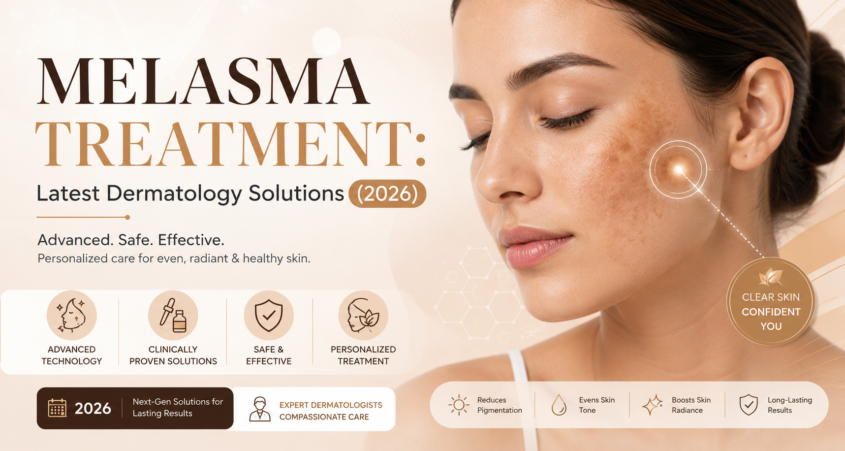
Melasma Treatment is a common skin problem that affects millions of people all over the world. It shows up as grey patches on the face, especially on the cheeks, forehead, nose, upper lip and chin. Even though melasma is not bad for your health, it can really affect how you feel about yourself.
Thanks to developments in dermatology, there are now very effective treatments that can help reduce the appearance of these patches, improve your skin tone and stop them from coming back. These modern treatments combine skincare, laser technology, chemical peels and changes to your lifestyle to give you better and longer-lasting results.
In this guide, you will learn about what causes melasma, what the symptoms are, how it is diagnosed, the latest treatments that dermatologists are using in 2026, tips on how to prevent it, and answers to some frequently asked questions.
What is Melasma?
Melasma is a skin condition that causes patches to appear on your face because your skin is producing too much melanin. It usually affects women. Men can get it too.
This condition happens when the cells in your skin that produce pigment become overactive because of changes in your hormones, sun, your genes and inflammation.
Even though melasma can not always be completely cured, it can be managed with care from a dermatologist.
Common Symptoms of Melasma
Melasma usually starts slowly. Can cause symptoms like:
* Brown or gray patches on your face
* Patches on both sides of your face
* Dark spots on your cheeks
* Discoloration on your forehead
* Pigmentation on your lip
* Dark spots on your chin
* Discoloration on your nose
* Sometimes it can appear on your neck and forearms
* It does not. Hurt
* The patches get darker when you are in the sun
Causes of Melasma
Some things can cause melasma to develop.
1. Being in the Sun
The sun’s rays make your skin produce melanin, which is why being in the sun too much is the main cause of melasma.
2. Hormonal Changes
Being pregnant, taking birth control pills, hormone replacement therapy and having thyroid problems can all trigger melasma.
3. Genetics
If your family members have melasma, you are more likely to get it
4. Skin Inflammation
Having acne, eczema or getting procedures can lead to melasma.
5. Certain Medicines
Some medicines can make your skin more sensitive to the sun.
6. Heat and Light
Research shows that heat and the light from devices can make melasma worse in some people.
How Dermatologists Diagnose Melasma
Dermatologists can usually diagnose melasma by looking at your skin and talking to you about your medical history. They may also use a lamp or a dermatoscope to get a closer look. Sometimes they might need to do a skin biopsy if the pigmentation looks unusual.
Getting the diagnosis helps the dermatologist figure out how deep the pigmentation is and what the best treatment plan will be.
The Latest Dermatology Solutions for Melasma (2026)
Today, dermatologists use a combination of treatments to get the best results.
1. Special Creams
Dermatologists often prescribe creams that have ingredients like hydroquinone, azelaic acid, kojic acid and others. These creams help reduce the appearance of the patches and make your skin look brighter.
2. Triple Combination Cream
This is still the treatment for melasma. It has hydroquinone, tretinoin and a mild corticosteroid. It helps reduce pigmentation, improves your skin texture and reduces inflammation. However, you should only use it under the supervision of a dermatologist.
3. Chemical Peels
Chemical peels remove the damaged skin cells. Help your skin regenerate. There are types of peels like glycolic acid peel, salicylic acid peel and others. They help brighten your skin, remove pigmentation and improve the way your skin absorbs products.
4. Laser Treatment
Laser technology has become safer and more effective for treating melasma. There are types of lasers like Q-Switched Nd: YAG Laser and Pico Laser. Laser treatment breaks down the pigment in your skin while minimising damage to your skin. You usually need to have sessions.
5. Microneedling with Tranexamic Acid
Microneedling creates channels in your skin that help the medications absorb better. It helps improve collagen production, skin texture and reduces pigmentation.
6. Oral Tranexamic Acid
For cases of melasma, dermatologists might prescribe oral tranexamic acid. It helps reduce the formation of pigment and improves the appearance of melasma. However, you should only take it under the supervision of a dermatologist because it can have side effects.
7. Advanced Brightening Treatments
Some dermatology clinics also offer treatments like glutathione therapy, antioxidant treatments and others. These treatments support your skin health and improve the results of your treatment.
Daily Skincare Routine for Melasma
Having a skincare routine is essential to maintaining the results of your treatment.
In the morning, you should use a cleanser, vitamin C serum, niacinamide serum, moisturiser, and a broad-spectrum SPF 50+ sunscreen.
In the evening, you should use a cleanser, your prescription treatment, a hydrating moisturizer and a barrier repair cream if you need it.
It is very important to be consistent with your skincare routine to prevent the pigmentation from coming.
Sunscreen: The Important Step
Without sunscreen, even the best treatments will not work.
You should choose a sunscreen that has SPF 50+ PA++++ protection and broad-spectrum UVA & UVB coverage. You should also look for sunscreens that have iron oxides, which help protect your skin from light.
You should apply sunscreen every two to three hours when you are outside.
Lifestyle Tips to Prevent Melasma
Making some simple changes to your lifestyle can really help reduce the appearance of melasma.
You should wear a wide-brim hat, use sunglasses, avoid being in the sun much, stay hydrated, eat foods that are rich in antioxidants, reduce stress, avoid using harsh cosmetic products and never skip applying sunscreen.
You should also follow the instructions of your dermatologist consistently.
Foods That Support Healthy Skin
What you eat can really affect the health of your skin.
You should include foods that’re rich in vitamin C, vitamin E, omega-3 fatty acids, zinc and selenium. Some examples of these foods are tomatoes, berries, citrus fruits, green leafy vegetables, nuts and seeds.
These nutrients help reduce the stress that can cause pigmentation.
Can Melasma Be Permanently Cured?
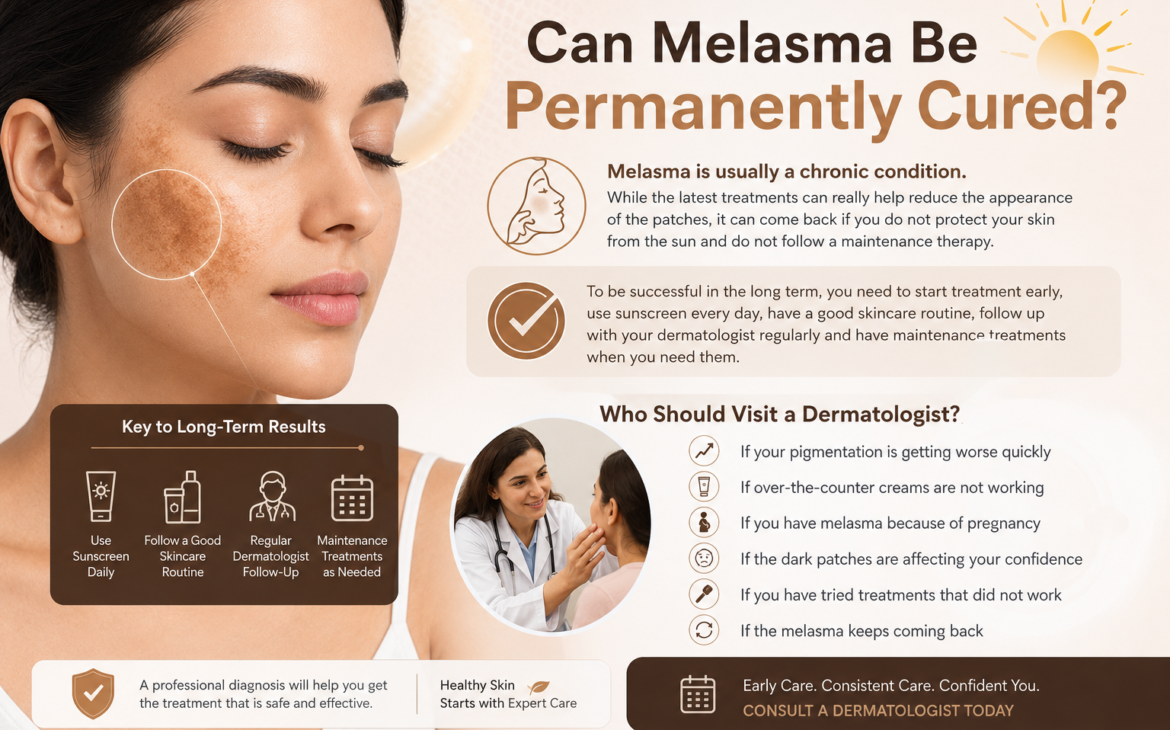
Melasma is usually a chronic condition.
While the latest treatments can really help reduce the appearance of the patches, it can come back if you do not protect your skin from the sun and do not follow a maintenance therapy.
To be successful in the long term, you need to start treatment early, use sunscreen every day, have a good skincare routine, follow up with your dermatologist regularly and have maintenance treatments when you need them.
Who Should Visit a Dermatologist?
You should consult a dermatologist if your pigmentation is getting worse quickly, if over-the-counter creams are not working, if you have melasma because of pregnancy, if the dark patches are affecting your confidence, if you have tried treatments that did not work or if the melasma keeps coming back.
A professional diagnosis will help you get the treatment that is safe and effective.
Conclusion
Melasma is a skin condition that can be managed with the combination of professional care and a consistent skincare routine. The latest treatments, including creams, chemical peels, laser therapy, microneedling and oral medications, can give you excellent results. However, it is very important to protect your skin from the sun and have a skincare routine. By consulting a dermatologist early and following a long-term maintenance plan, you can really reduce the appearance of melasma, improve your complexion and have healthier and more even-toned skin.
FAQs
1. What is the effective treatment for melasma?
The effective treatment for melasma is usually a combination of special creams, sunscreen, chemical peels and laser treatments. The best treatment for you will depend on how bad your melasma’s
2. Can laser treatment completely remove melasma?
Laser treatment can really help reduce the appearance of melasma. It can come back if you do not protect your skin from the sun and do not follow a maintenance therapy.
3. How long does it take to treat melasma?
You can usually see an improvement in 8-12 weeks. It may take several months of consistent treatment to get the best results.
4. Is melasma bad for your health?
No, melasma is not bad for your health. It can really affect how you feel about yourself.
5. Can sunscreen alone improve melasma?
Using sunscreen every day can really help prevent melasma from getting worse and support your treatment. It usually works best when combined with other therapies that your dermatologist recommends.
Thanks for reading
……………………………………………………
Click here to read more: Visit now
Visit our website to see all services: Click here to visit
Directly contact us on WhatsApp at +91 8448813136
Call now : +91 7678516068
acne and pigmentation treatmentdermatologist skin care tipsmonsoon skincare tipsskin care tips for Indian weatherskin protection in summerskincare routine for Indian climatewinter skincare routine India
Best dermatologist in DelhiBest dermatologist South DelhiEczema children and adultsHair growth therapy in DelhiLaser for acne & scar under senior consultantPsoriasis treatment in DelhiSkin allergy treatmentSkin specialist in DelhiTop acne treatment in DelhiTop Vitiligo cures in Delhi
acne scar laser treatmentadvanced skin laser treatmentbest dermatologist for laser treatment in delhidermatologist south delhilaser clinic in delhilaser dermatologist delhilaser skin treatment delhipigmentation laser treatment delhiSkin specialist in Delhi
Acne Scar TreatmentAcne Treatment DelhiBest dermatologist in DelhiBridal Skin CareChemical Peel TreatmentGroom Skin CareHydrafacial DelhiLaser Skin TreatmentPre Bridal FacialPre-Wedding Skin TreatmentsSkin allergy treatmentSkin Glow TreatmentSkin Specialist DelhiWedding Skin Care Tips