Hormonal Acne: What You Need to Know
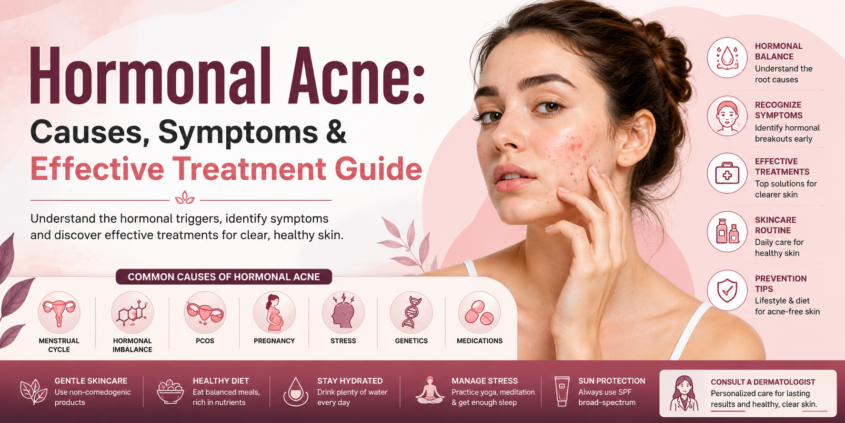
Hormonal acne is a problem for a lot of people. It happens when your hormones get out of balance and cause your skin to make too much oil. This can lead to bumps and cysts on your skin, especially on your jawline, chin and cheeks. It can be really frustrating. Affect how you feel about yourself.
Hormonal acne is not a problem for teenagers. It can also happen to adults, women, when they are having their period, are pregnant or are going through menopause. Some women may also get acne if they have a condition called Polycystic Ovary Syndrome or PCOS. The good news is that hormonal acne can be treated with skincare, lifestyle changes and medical help.
So What is Hormonal Acne?
It is a type of acne that happens when your hormones get out of balance and cause your skin to make too much oil. When this oil mixes with skin cells and bacteria, it can clog your pores and cause bumps, blackheads and cysts.
What causes acne? There are a few reasons why people get hormonal acne.
1. Hormone changes can cause your skin to make oil.
2. When women have their period, their hormone levels change, which can cause acne.
3. Women with PCOS may get acne because their hormones are out of balance.
4. Pregnancy can also cause acne.
5. When women go through menopause, their hormone levels change again, which can cause acne.
6. Stress can also make hormonal acne worse.
7. If your family members have acne, you may be more likely to get it
8. Some medicines can cause acne, such as steroids and some birth control pills.
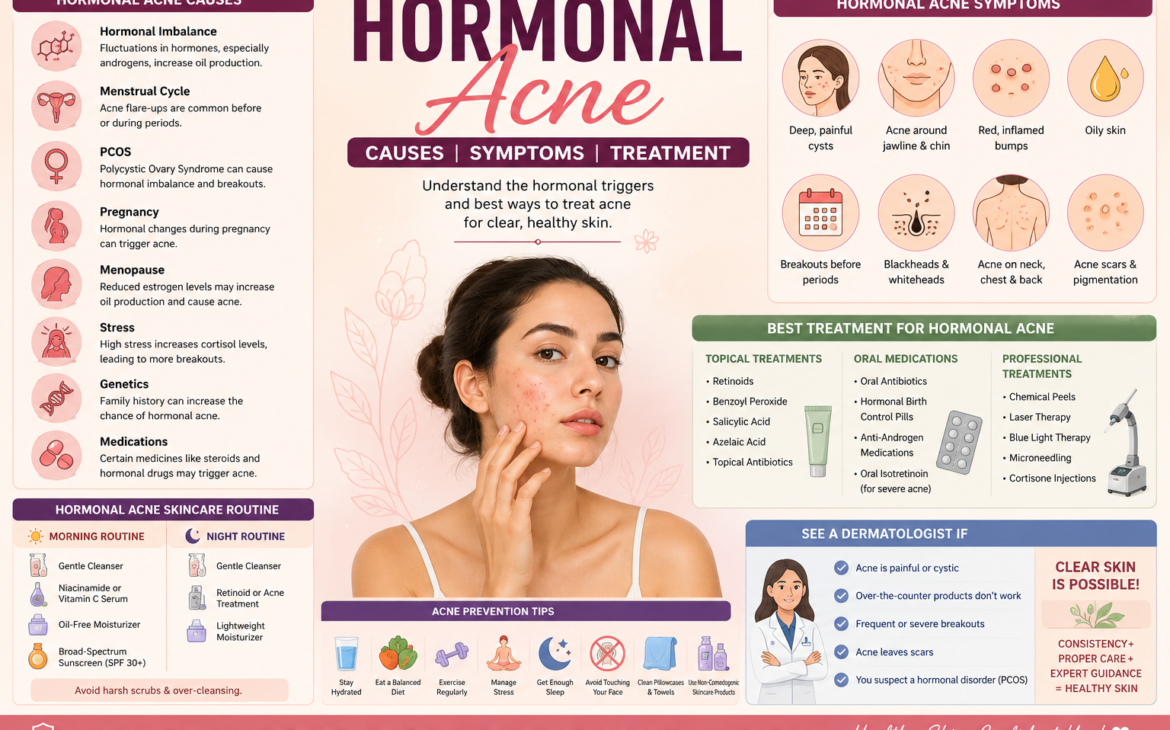
Hormonal acne can look different from other types of acne. You may get painful cysts or bumps on your skin that are red and sore. You may also get blackheads and whiteheads. Your skin may be oily. If you get acne, you may notice that it happens in the same places on your skin over and over again.
Some people are more likely to get acne than others. This includes teenagers, women between 20 and 45 years old, women with PCOS, pregnant women and women who are going through menopause. If you have a family history of acne or if you are stressed out a lot, you may also be more likely to get acne.
To figure out if you have acne, a dermatologist will look at your skin, ask you about your medical history, and maybe do some blood tests. This will help them come up with a plan to treat your acne.
There are ways to treat hormonal acne.
1. You can use creams or gels that you put on your skin to help reduce inflammation and unclog your pores.
2. Your doctor may prescribe you some medicine to take by mouth, like antibiotics or birth control pills.
3. You can also get help from a dermatologist, such as chemical peels or laser therapy.
To take care of your skin and help with acne, you should wash your face twice a day with a gentle cleanser, use a serum that has niacinamide or vitamin C in it, and put on a moisturiser that does not have any oil in it. You should also wear sunscreen every day to protect your skin from the sun.
There are some things you can do to help control your acne. You should eat a diet with a lot of fruits and vegetables and not too much sugar or processed food. You should also exercise regularly, get sleep, and try to reduce your stress. Do not pick at your pimples. Try to keep your hands away from your face.
Some foods may help with acne, like leafy green vegetables, berries and fatty fish. You should also try to limit the amount of drinks and dairy products you eat.
You should see a dermatologist if your acne is painful or leaving scars, if over-the-counter products are not working, or if your acne is affecting your self-esteem. They can help you come up with a plan to treat your acne and improve your skin.
Conclusion
Hormonal acne is a problem, but it can be treated. If you have acne, do not give up. You can get help from a dermatologist, and with the treatment, you can have healthier, clearer skin.
Frequently Asked Questions
1. What causes acne?
Hormonal acne is caused by changes in your hormone levels, which can make your skin produce oil and cause breakouts.
2. Where does hormonal acne usually appear?
Hormonal acne usually appears on the chin, jawline and neck.
3. Can hormonal acne go away on its own?
Sometimes hormonal acne can go away on its own. If it is bad, you may need to get treatment from a dermatologist.
4. Can hormonal acne be treated?
Yes, hormonal acne can be treated with creams, medicines and lifestyle changes.
5. How long does it take to treat acne?
It can take weeks to a few months to see improvement in your hormonal acne, but it is important to be patient and keep following your treatment plan.
Thanks for reading
……………………………………………………
Click here to read more: Visit now
Visit our website to see all services: Click here to visit
Directly contact us on WhatsApp at +91 8448813136
Call now : +91 7678516068
acne and pigmentation treatmentdermatologist skin care tipsmonsoon skincare tipsskin care tips for Indian weatherskin protection in summerskincare routine for Indian climatewinter skincare routine India
Best dermatologist in DelhiBest dermatologist South DelhiEczema children and adultsHair growth therapy in DelhiLaser for acne & scar under senior consultantPsoriasis treatment in DelhiSkin allergy treatmentSkin specialist in DelhiTop acne treatment in DelhiTop Vitiligo cures in Delhi
acne scar laser treatmentadvanced skin laser treatmentbest dermatologist for laser treatment in delhidermatologist south delhilaser clinic in delhilaser dermatologist delhilaser skin treatment delhipigmentation laser treatment delhiSkin specialist in Delhi
Acne Scar TreatmentAcne Treatment DelhiBest dermatologist in DelhiBridal Skin CareChemical Peel TreatmentGroom Skin CareHydrafacial DelhiLaser Skin TreatmentPre Bridal FacialPre-Wedding Skin TreatmentsSkin allergy treatmentSkin Glow TreatmentSkin Specialist DelhiWedding Skin Care Tips