Eczema vs Psoriasis: How Dermatologists Diagnose Skin Conditions
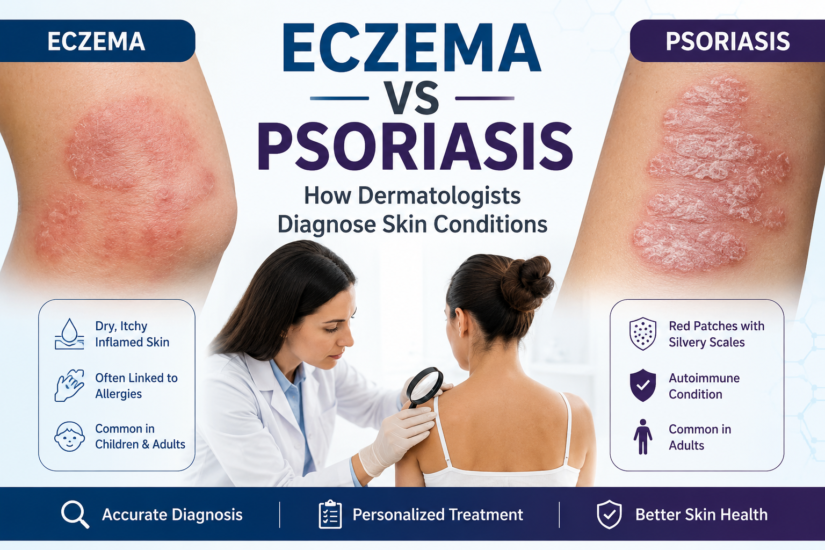
Skin disorders like psoriasis and/or eczema are on the rise among children and adults. Both types of eczema and psoriasis look the same at first but are actually different skin ailments requiring the proper diagnosis and specialized care. Many people mistake eczema for psoriasis; however, the key to differentiating between the two is understanding what eczema vs psoriasis is and how they differ as each skin condition has a very different way of being treated. Additionally, the improper treatment of either disease may result in worsening symptoms and potentially life-threatening, severe irritable skin.
Dermatologists utilize a combination of the following advanced methods to accurately diagnose chronic skin diseases: detailed clinical assessment; skin examination; allergy testing; and, if necessary, skin biopsy. Based on these tests, the dermatologist can establish a personalized treatment plan that promotes the patient’s long-term skin health.
This in-depth article will provide a comparison of eczema and psoriasis skin disorders by discussing how they differ in occurrence, frequency of occurrence, causative factors, symptoms, diagnostic methods, and the most recent treatment options used by dermatologists and their patients.
What is Eczema?
Eczema, also known as atopic dermatitis, is a chronic inflammatory skin condition that weakens the skin barrier. Consequently, the skin becomes dry, sensitive, itchy, and easily irritated.
Eczema commonly develops during childhood, although adults may also suffer from it later in life. Furthermore, eczema is strongly associated with allergies, asthma, and environmental triggers.
Common Symptoms of Eczema
People with eczema may experience:
- Dry skin
- Severe itching
- Red rashes
- Cracked skin
- Skin irritation
- Oozing or crusting
- Thickened skin patches
Additionally, eczema symptoms often worsen because of stress, weather changes, allergens, harsh soaps, and pollution.
What is Psoriasis?
Psoriasis is a chronic autoimmune skin disorder that causes skin cells to multiply much faster than normal. As a result, thick, scaly patches develop on the skin surface.
Unlike eczema, psoriasis is mainly linked with immune system dysfunction rather than allergies. Moreover, psoriasis can also affect nails, joints, and scalp health.
Common Symptoms of Psoriasis
Common psoriasis symptoms include:
- Thick red patches
- Silver-colored scales
- Dry cracked skin
- Burning sensation
- Skin pain
- Scalp flaking
- Joint stiffness in some cases
Furthermore, psoriasis symptoms may appear in cycles with periods of flare-ups and remission.
Eczema vs Psoriasis: Key Differences
Although eczema and psoriasis may look similar, dermatologists identify several important differences between the two conditions.
| Feature | Eczema | Psoriasis |
| Main Cause | Allergies & skin barrier dysfunction | Autoimmune disorder |
| Itching | Extremely itchy | Mild to moderate itching |
| Skin Texture | Dry and inflamed | Thick and scaly |
| Common Areas | Elbows, knees, cheeks | Scalp, elbows, knees |
| Age Group | Common in children | Common in adults |
| Skin Appearance | Red irritated patches | Thick plaques with scales |
| Triggers | Allergies, stress, weather | Immune dysfunction, stress |
Therefore, professional diagnosis becomes essential for choosing the correct treatment.
Causes of Eczema and Psoriasis
Atopic Dermatitis Risk Factors
Atopic dermatitis, commonly called eczema, is mostly triggered by genetic makeup, impurities in the skin barrier, food allergies, exposure to dust and pollution, and stressful situations. People with asthma or allergic rhinitis also have an increased risk of developing eczema.
Psoriasis Risk Factors
Psoriasis is caused by an overactive immune system; however, several triggers can make it worse.
Common psoriasis triggers are stress, skin injury, smoking, alcohol consumption, infections, cold weather, and some medicines. A history of psoriasis in the family is also a strong indicator of developing this condition.
Dermatology Diagnosis of Eczema vs. Psoriasis
Dermatopathologists utilize multiple evaluation techniques before determining whether patients have eczema or psoriasis.
1. Skin Examination
The first component of the diagnosis involves closely examining the patient’s skin for texture, scale/crust, dryness/dryness associated with soreness, and inflammation. Psoriasis is characterized by large, thick silver-colored crusted lesions (plaque type). Eczema usually appears as dry and inflamed skin with intense itching.
2. Personal Medical History
Doctors evaluate personal medical history and may include:
• Family history
• Past allergic reactions
• Family members with asthma
• Lifestyle habits
• Stress levels
• Current medical conditions
3. Allergy Testing
They rank based on significance from least to most significant each of the above evaluations. As eczema is often due to allergy-related triggers, dermatologists may perform allergy tests. Example triggers include dust, food, animal dander, pollen, and chemical irritants. Identifying the allergy trigger will assist in keeping eczema under control and minimize future flares.
4. Skin Biopsy
Dermatologists commonly will take a small sample of the outer layer of the skin called a biopsy to help diagnose your condition. Biopsies may assist in distinguishing between psoriasis and other skin disorders, such as eczema and the flavor of the month.
When taking your biopsy, the physician will remove a small piece of skin (so small it won’t be noticeable after a few days), view the piece of skin under a microscope, check for signs of inflammation, and observe the characteristics of the skin cells.
Not all patients require biopsies; however, they can be a valuable tool when trying to differentiate psoriasis from eczema or other skin conditions.
5. Joint and nail assessment
Since psoriasis can affect/impact both your joints and nails, dermatologists will typically look for:
• Nail indentations
• Thickened nails
• Aching joints
• Swelling
Eczema patients very rarely have these issues.
Eczema Treatment Options
The treatment of modern-day eczema revolves around reducing inflammation within the body and healing the barrier on the exterior of the skin to protect it and promote healing.
The following treatments are often prescribed for individuals with eczema:
Moisturizers
Hydrating and keeping the skin moisturized is very important if you have eczema.
Corticosteroids
Corticosteroids are effective in alleviating the symptoms of itchiness and inflammation quickly.
Non-Corticosteroid Creams
New steroid-free products are being developed and marketed due to the alarming side effects associated with the long-term use of corticosteroids.
Antihistamines
Antihistamines can help relieve itching, as well as reduce allergic responses.
Biologic medication
Biologics are utilized for cases of severe eczema and consist of a variety of approved biologic medications that are injected.
Phototherapy
Phototherapy is a controlled UV light treatment used to reduce inflammation.
In addition, dermatologists suggest you try to avoid your eczema triggers, as well as develop a gentle, non-irritating skin care regime.
Psoriasis Treatment Options
When treating psoriasis, your dermatologist will focus on eliminating or controlling the immune system’s activity and capturing and slowing the rate of skin cell growth.
Below are common psoriasis treatment options:
Topical Creams
Creams are typically recommended for patients with mild psoriasis symptoms.
Vitamin D cream is often suggested as a natural treatment for psoriasis..
Biologic Injections
Modern biologics target specific immune pathways.
Phototherapy
UV light treatment helps improve skin plaques.
Furthermore, lifestyle management and stress reduction also play an important role.
Can Eczema and Psoriasis Occur Together?
Although uncommon, some patients may experience features of both eczema and psoriasis simultaneously. Therefore, proper dermatologist evaluation becomes extremely important for accurate diagnosis and treatment planning.
Daily Skincare Tips for Chronic Skin Conditions
Whether you have eczema or psoriasis, proper skincare is essential for controlling flare-ups.
Use Gentle Cleansers
Avoid harsh soaps and fragrances.
Moisturize Daily
Hydrated skin heals faster and stays healthier.
Avoid Scratching
Scratching worsens skin inflammation.
Manage Stress
Stress can trigger both eczema and psoriasis flare-ups.
Wear Comfortable Clothing
Soft cotton fabrics help reduces irritation.
Follow Dermatologist Guidance
Self-medication may worsen symptoms.
When Should You Visit a Dermatologist?
You should consult a dermatologist if:
- Skin rashes keep returning
- Severe itching develops
- Skin starts cracking or bleeding
- Home remedies stop working
- Symptoms spread rapidly
- Sleep gets disturbed regularly
Early diagnosis can prevent complications and improve long-term skin health significantly.
Conclusion
Understanding the difference between eczema vs psoriasis is extremely important for accurate treatment and long-term skin management. Although both conditions cause redness, inflammation, and irritation, they differ greatly in causes, symptoms, and treatment approaches.
Eczema is mainly linked with allergies and skin barrier dysfunction, whereas psoriasis is an autoimmune condition involving rapid skin cell growth. Therefore, professional dermatologist diagnosis is essential for identifying the exact condition and selecting the most effective treatment plan.
Today, advanced dermatology treatments including biologics, phototherapy, non-steroidal creams, and immune-targeted therapies are helping patients manage chronic skin conditions more effectively than ever before.
If you are experiencing persistent skin irritation, itching, or scaling, consulting an experienced dermatologist can help you receive proper diagnosis and healthier skin outcomes.
FAQs
1. What is the main difference between eczema vs psoriasis?
Eczema is mainly associated with allergies and skin barrier dysfunction, while psoriasis is an autoimmune skin condition.
2. Which condition is more itchy: eczema or psoriasis?
Eczema usually causes more intense itching compared to psoriasis.
3. Can psoriasis look like eczema?
Yes, both conditions may appear similar initially, which is why dermatologist diagnosis is important.
4. Is psoriasis more serious than eczema?
Psoriasis may sometimes affect joints and nails, making it more complex in certain patients.
5. Can stress trigger eczema and psoriasis?
Yes, stress is a major trigger for both skin conditions.
Thanks for reading
……………………………………………………………………………………………………………………………………………………
Click here to read more: Visit now
Visit our website to see all services: Click here to visit
Directly contact us on WhatsApp at +91 8448813136
Call now : +91 7678516068
acne and pigmentation treatmentdermatologist skin care tipsmonsoon skincare tipsskin care tips for Indian weatherskin protection in summerskincare routine for Indian climatewinter skincare routine India
Best dermatologist in DelhiBest dermatologist South DelhiEczema children and adultsHair growth therapy in DelhiLaser for acne & scar under senior consultantPsoriasis treatment in DelhiSkin allergy treatmentSkin specialist in DelhiTop acne treatment in DelhiTop Vitiligo cures in Delhi
acne scar laser treatmentadvanced skin laser treatmentbest dermatologist for laser treatment in delhidermatologist south delhilaser clinic in delhilaser dermatologist delhilaser skin treatment delhipigmentation laser treatment delhiSkin specialist in Delhi
Acne Scar TreatmentAcne Treatment DelhiBest dermatologist in DelhiBridal Skin CareChemical Peel TreatmentGroom Skin CareHydrafacial DelhiLaser Skin TreatmentPre Bridal FacialPre-Wedding Skin TreatmentsSkin allergy treatmentSkin Glow TreatmentSkin Specialist DelhiWedding Skin Care Tips